At our most recent PSP meetings in London, there was near-unanimous agreement that the open podcast system needs to offer a better solution for video podcasts delivered via RSS.

Why do we need a new solution for video podcasts?
Video has been part of podcasting for a long time. Tristan Louis first introduced the idea of distributing video via RSS in 2000. Five years later, Apple brought podcasts to iTunes with support for video podcasts. Some popular video-first shows emerged from that era, including Tekzilla, Diggnation, and The Ricky Gervais Podcast.

Today, interest in video is back, and more creators are interested in creating podcasts that feature video.
However, the old iTunes paradigm of separate feeds for audio and video is outdated:
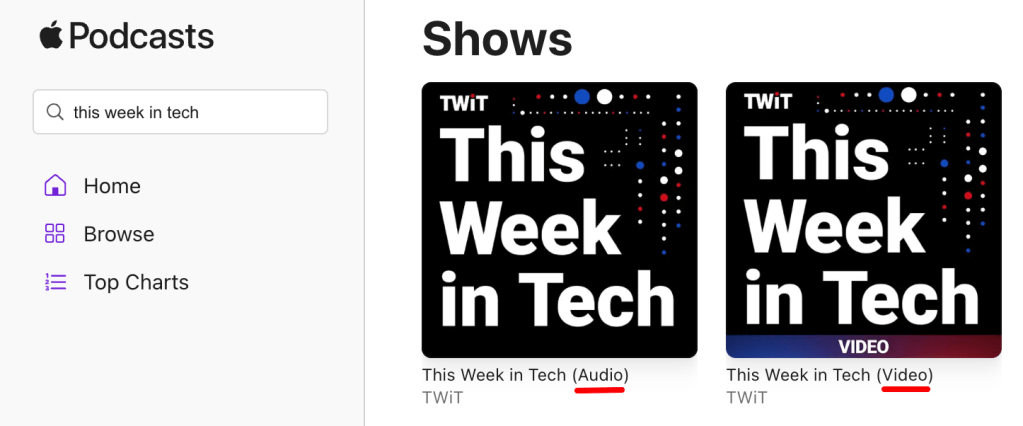
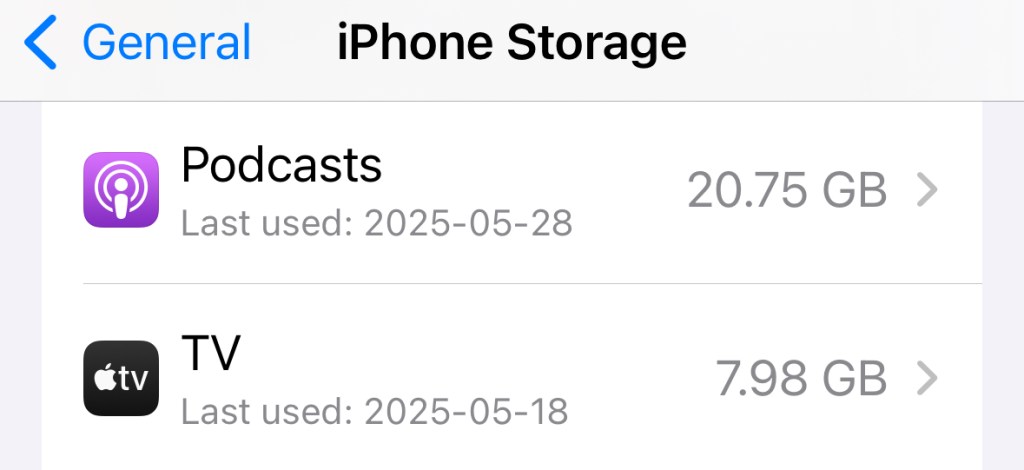
This system also had a further complication: consumers had to download massive video files to their devices, which took up valuable storage space.
Our proposal: HLS streaming
Instead, we’re proposing a new paradigm: creators would have an audio-first RSS feed, with an alternate enclosure for streaming video via HLS.
HLS (HTTP Live Streaming) is an adaptive bitrate streaming protocol developed by Apple. Unlike traditional file downloads, HLS breaks media into small segments (typically 2-10 seconds each), allowing consumers to stream video without downloading entire files, with playback quality that automatically adjusts to their internet connection speed.
Here’s an example of how the alternateEnclosure might look in an RSS feed:
<podcast:alternateEnclosure type="application/x-mpegURL" length="0" bitrate="2500000" height="1080" lang="en" title="HD Video Stream" rel="alternate">
  <podcast:source uri="https://test-streams.mux.dev/x36xhzz/x36xhzz.m3u8"/>
</podcast:alternateEnclosure>
View a sample RSS feed, courtesy of Andrew Kuklewicz from PRX
This ensures that podcasters don’t split their audience between two feeds and allows them to publish a video podcast to open RSS apps.
In this scenario, creators would upload video episodes to their hosting platform. The videos would be encoded in formats compatible with HLS, and could be requested by listeners using apps that support streaming, such as Pocket Casts, TrueFans, and Fountain.
In an ideal world, we would like to see Apple Podcasts support this new paradigm (we think it would be especially beneficial to them for expanding Apple TV+ and offering video as bonus content in Podcast Subscriptions).
However, apps like Pocket Casts already support HLS streaming, so we could roll this out whenever the spec is ready.
Discussion and draft spec
PSP members initially discussed our approach to video in August 2024. At that time, the main concern from podcast hosting companies was how we would handle the bandwidth costs.
This is still a primary concern in the PSP Slack discussions:
![I love the idea of HLS enclosures. I think one of the big issues for everyone is pricing. Has anyone done any sort of deep dive into different providers, or rolling your own? I did some back of napkin math on [CDN provider] and the costs are completely prohibitive for any sort of real world scale.](https://podstandards.org/wp-content/uploads/2025/05/new-podcast-standards-project-discussion-on-costs-1024x297.png)
However, we’re moving forward in developing a spec for HLS video streaming in podcast RSS feeds.
Multiple hosting providers are planning on building prototypes for how this might look on their end, and are coordinating with listening apps like Pocket Casts to test those implementations.
Audio Streaming
While our primary focus is on solving video podcast distribution, HLS streaming also offers significant advantages for audio-only podcasts. HLS can deliver adaptive bitrate audio streams, automatically adjusting quality based on network conditions, providing crystal-clear audio on fast connections while ensuring uninterrupted playback on slower networks. Adding an additional alternateEnclosure for audio streaming via HLS would be fairly straightforward.
Improving podcast consumption analytics and measurement
HLS adoption could also help with our goal of providing consumption analytics for the open podcast ecosystem.
“I have a feeling this delivery will go hand in hand with video HLS to provide more accurate measurement for not only content, but ad impressions as well.” – Rockie Thomas
Traditional RSS enclosures provide limited insight into actual listening behavior – hosting platforms know when files are downloaded, but not if they’re actually consumed. HLS streaming, however, could provide detailed analytics about actual playback: how long listeners engage, where they drop off, and which segments are replayed. This would give creators and hosting platforms YouTube-level insights while maintaining the open, decentralized nature of RSS podcasting.
Hurdles to overcome
There are still unanswered questions, especially around bandwidth costs for hosting platforms. However, PSP members are willing to collaborate to solve these challenges. A few members, like Rockie and Kevin, already have experience building this infrastructure. (One interesting suggestion is to have larger platforms like Apple Podcasts cache the video.)
What’s at stake?
“We know from our creator surveys, that podcasters want to do video, and that they want to disribute their video ‘everywhere.’ There’s an appetite for more podcast platforms to support video podcasts (beyond YouTube).” – Helen Ryles
If we don’t nail this, we’ll be essentially telling podcasters that their only real options for podcast video are YouTube and Spotify.
If you’d like to join the PSP Slack to discuss this more, send me a DM on LinkedIn.
Cheers,
Justin Jackson
This post was written by Justin Jackson (Co-founder at Transistor).